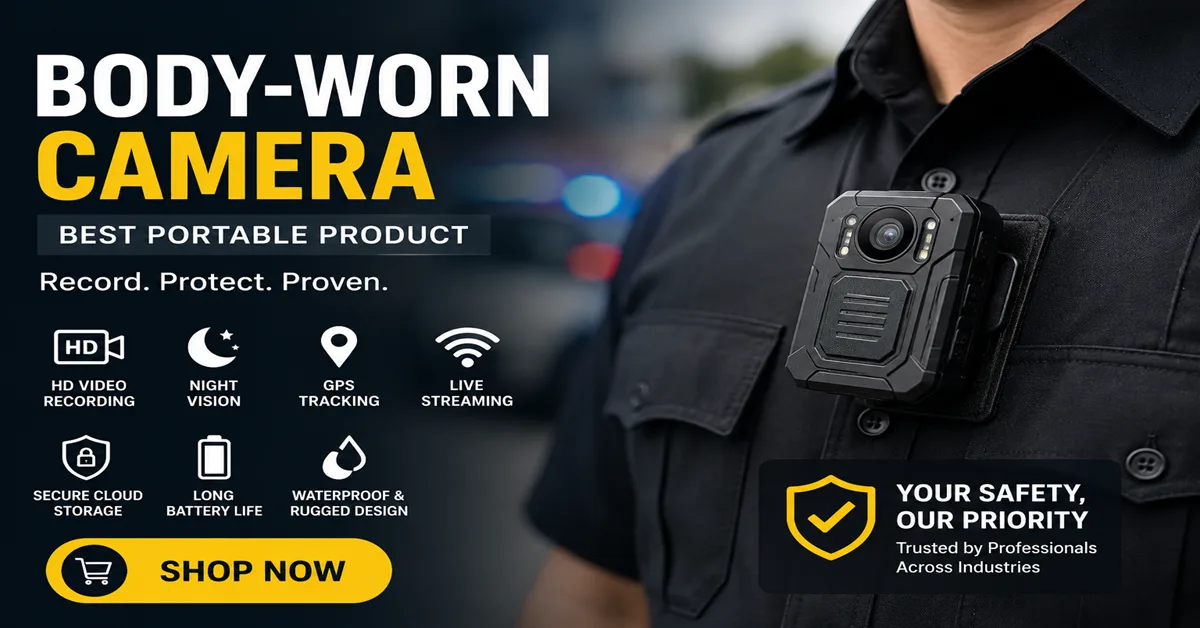
Body-Worn Camera – Best Portable Product
A Body-Worn Camera (BWC), commonly known as a wearable camera or body camera. It is a compact video recording device designed to be worn on a person’s uniform, clothing, helmet, or equipment. It records video and audio interactions in real time, providing an accurate account of events. Body-Worn cameras are widely used by law enforcement agencies, security personnel, healthcare workers, transportation staff, and other professionals who require reliable documentation of incidents and interactions.
How Does a Body-Worn Camera Work?
Body-Worn cameras capture video and audio through built-in sensors and microphones. Once activated, the device continuously records and stores footage on internal memory, removable storage, or cloud-based platforms. Many modern body cameras include features such as GPS tracking, live streaming, wireless connectivity, and automatic event tagging. Recorded footage can later be reviewed, analyzed, and used for reporting, training, or evidence purposes.
History and Evolution of Body Cameras
Body cameras originated as basic recording devices used primarily by law enforcement agencies. Early models offered limited storage and video quality. As technology evolved, body cameras gained advanced features such as HD video, night vision, GPS integration, cloud storage, and AI-powered analytics. Today, Body-Worn cameras serve multiple industries and have become essential tools for transparency, accountability, and operational efficiency.
Key Features of Modern Body-Worn Cameras
Modern body cameras offer numerous features, including:
- High-definition video recording
- Audio recording capabilities
- Night vision technology
- GPS location tracking
- Wi-Fi and LTE connectivity
- Long battery life
- Secure cloud storage
- Live streaming functionality
- Waterproof and rugged designs
- AI-powered analytics and facial recognition capabilities
Benefits of Using Body-Worn Cameras
Body cameras provide several advantages:
- Increased accountability and transparency
- Enhanced evidence collection
- Improved employee and public safety
- Reduced disputes and false claims
- Better training opportunities
- Improved incident documentation
- Increased public trust
- Enhanced operational efficiency
Importance of Body Cameras in Law Enforcement
Law enforcement agencies rely heavily on Body-Worn cameras to document interactions with the public. These devices help collect evidence, reduce complaints, improve officer accountability, and support investigations. Body camera footage often serves as critical evidence in legal proceedings and internal reviews.
Core uses of Body Worn Camera
Body-Worn Cameras for Security Guards
Security guards use body cameras to monitor premises, document incidents, and deter criminal activities. Recorded footage helps verify events, resolve disputes, and provide evidence when necessary. Body cameras also improve professionalism and accountability within security operations.
Body Cameras for Private Investigators
Private investigators benefit from body cameras by capturing interviews, surveillance activities, and field investigations. The footage can provide valuable documentation and support legal cases while ensuring accurate reporting of events.
Body Cameras for Emergency Responders
Emergency responders, including firefighters and paramedics, use body cameras to record emergency situations and interactions with the public. Footage assists in training, incident analysis, and improving response procedures.
Body Cameras for Healthcare Professionals
Body-worn cameras are being widely adopted by healthcare workers to enhance work safety and to deter violent or aggressive behaviour. Cameras can document patient interactions, support incident reporting, and enhance staff protection.
Body Cameras for Transportation and Logistics
Transportation personnel, delivery drivers, and logistics workers use body cameras to record deliveries, customer interactions, and operational activities. These recordings help resolve disputes, improve safety, and provide accountability.
Body Cameras for Retail and Customer Service Staff
Retail employees and customer service representatives use body cameras to document interactions, reduce theft, and improve workplace security. Recorded footage can also support customer complaint investigations.
Types of Body-Worn Cameras
Different body camera models are designed for various use cases.
Standard Body Cameras
Standard body cameras provide reliable video and audio recording with basic storage capabilities. They are commonly used in security and law enforcement applications.
4K Body Worn Camera
4K body cameras offer ultra-high-definition video quality, allowing users to capture detailed footage suitable for investigations and evidence collection.
Live Streaming Body Cameras
These cameras transmit video in real time to command centers or supervisors, enabling immediate situational awareness and rapid response.
AI-Powered Body Cameras
AI-enabled body cameras incorporate intelligent features such as facial recognition, object detection, automatic tagging, and behavioural analysis.
Night Vision Body Cameras
Night vision body cameras use infrared technology to capture clear footage in low-light or complete darkness, making them ideal for nighttime operations.
Essential Features to Consider
When selecting a Body-Worn camera, several key features should be evaluated.
Video Resolution
Higher resolution provides clearer images and better evidence quality. Options typically include:
- 1080p Full HD
- 2K Resolution
- 4K Ultra HD
Battery Life
Long battery life ensures uninterrupted recording during extended shifts. Many professional body cameras offer 8 to 15 hours of continuous operation.
Storage Capacity
Storage capacity determines how much footage can be retained before transfer or deletion. Modern devices may include:
- 64GB
- 128GB
- 256GB
- Expandable storage options
GPS Tracking
GPS functionality records location data alongside video footage, improving accountability and incident reconstruction.
Wi-Fi and LTE Connectivity
Wireless connectivity enables:
- Remote access
- Live streaming
- Automatic uploads
- Real-time monitoring
Audio Recording Quality
High-quality microphones capture clear conversations and environmental sounds, improving the usefulness of recorded evidence.
Night Vision Technology
Infrared LEDs and low-light sensors allow effective recording in dark environments without compromising image quality.
Waterproof and Dustproof Ratings
Rugged body cameras often feature IP ratings that protect against:
- Water exposure
- Dust intrusion
- Harsh weather conditions
- Physical impacts
Advantages of Body-Worn Cameras
Major advantages include:
- Accurate event recording
- Enhanced transparency
- Better evidence management
- Improved safety
- Reduced liability
- Increased professionalism
- Efficient incident review
Challenges and Limitations of Body Cameras
Despite their benefits, body cameras present certain challenges:
- High implementation costs
- Storage management requirements
- Privacy concerns
- Maintenance needs
- Data security risks
- Technical malfunctions
- Battery limitations
Privacy Concerns and Data Protection
Organizations must balance transparency with privacy rights. Proper policies should address:
- Consent requirements
- Data retention periods
- Access restrictions
- Secure storage
- Data encryption
- Confidential information protection
Legal Regulations for Body-Worn Cameras
Body camera regulations vary by country and industry. Common legal considerations include:
- Recording consent laws
- Data protection regulations
- Public records requirements
- Evidence handling procedures
- Retention policies
Organizations should ensure compliance with applicable local laws.
Body Camera Policies and Compliance
Effective body camera programs require clear policies covering:
- Activation requirements
- Recording procedures
- Data retention schedules
- Access permissions
- Evidence management
- Employee responsibilities
Compliance helps maintain operational consistency and legal defensibility.
How to Choose the Best Body-Worn Camera
When selecting a body camera, consider:
- Intended use
- Video quality requirements
- Battery life
- Storage capacity
- Connectivity options
- Durability
- Budget
- Software compatibility
- Regulatory requirements
Best Body-Worn Camera Brands
Popular body camera manufacturers include:
- Axon Enterprise
- Motorola Solutions
- Reveal Media
- Wolfcom
- Transcend
- Secureye
Each brand offers different features tailored to specific industries and operational requirements.
Cost of Body-Worn Camera Systems
- Basic Body Cameras: $80–$300 (₹6,500–₹25,000) per device
- Suitable for basic video and audio recording.
- Ideal for small businesses and individual users.
- Mid-Range Body Cameras: $300–$800 (₹25,000–₹70,000) per device
- Includes HD recording, GPS tracking, Wi-Fi connectivity, and improved battery life.
- Advanced Body Cameras: $800–$2,000+ (₹70,000–₹1,70,000+) per device
- Features 4K video, live streaming, AI analytics, facial recognition, and cloud integration.
- Cloud Storage Subscription: $10–$50+ (₹800–₹4,200+) per user/month
- Provides secure storage, backup, and remote access to footage.
- Video Evidence Management Software: $20–$100+ (₹1,700–₹8,500+) per user/month
- Helps organize, search, manage, and share recorded footage.
- Docking Stations: $100–$500 (₹8,500–₹42,000)
- Used for charging devices and automatically uploading footage.
- Accessories and Mounts: $10–$200 (₹800–₹17,000)
- Includes clips, magnetic mounts, shoulder mounts, spare batteries, and carrying cases.
- Maintenance and Support Costs: Varies by provider
- May include software updates, warranty extensions, repairs, and technical support.
- Enterprise Deployment Costs: $10,000–$100,000+ (₹8.5 lakh–₹85 lakh+)
- Suitable for law enforcement agencies, security companies, and large organizations requiring multiple devices and centralized management systems.
Body Camera Accessories and Mounts
Common accessories include:
- Uniform clips
- Magnetic mounts
- Shoulder mounts
- Helmet mounts
- Charging docks
- Spare batteries
- Carrying cases
- External microphones
Accessories improve usability and operational flexibility.
Cloud Storage for Body Camera Footage
Cloud storage solutions provide:
- Secure data backup
- Remote access
- Automated uploads
- Scalable storage
- Improved evidence management
Cloud-based platforms simplify footage retention and retrieval processes.
Video Evidence Management Systems
Video Evidence Management Systems (VEMS) help organizations:
- Store footage securely
- Organize recordings
- Search evidence efficiently
- Manage retention schedules
- Share authorized footage
- Maintain audit trails
These systems are essential for large-scale deployments.
Maintenance and Care Tips
To maximize device lifespan:
- Clean lenses regularly
- Charge batteries properly
- Update firmware
- Inspect mounting systems
- Store devices safely
- Follow manufacturer guidelines
Routine maintenance improves reliability and performance.
Common Issues and Troubleshooting
Common body camera issues include:
Battery Problems
- Recharge or replace batteries.
Storage Errors
- Clear memory or replace damaged storage media.
Connectivity Failures
- Check Wi-Fi or LTE settings.
Audio Issues
- Inspect microphone components.
Video Quality Problems
- Clean the lens and adjust settings.
Future Trends in Body-Worn Camera Technology
Future developments may include:
- Higher-resolution recording
- Extended battery performance
- Advanced AI capabilities
- Enhanced cybersecurity
- Improved cloud integration
- Real-time analytics
- Edge computing technologies
These innovations will continue to expand body camera applications across industries.
AI and Analytics in Body Cameras
Artificial intelligence is transforming body camera technology through:
- Automatic event detection
- Facial recognition
- Speech transcription
- Behavioral analysis
- Evidence categorization
- Real-time alerts
AI helps organizations process large volumes of footage more efficiently.
Integration with Security Systems
Modern body cameras can integrate with:
- CCTV networks
- Access control systems
- Dispatch software
- Incident management platforms
- Evidence management systems
- Emergency response systems
Integration with security systems creates a unified surveillance network. When paired with the best CCTV camera systems, body-worn cameras enhance monitoring, evidence collection, and incident response.
Conclusion
Body-Worn cameras have evolved into powerful tools that support transparency, accountability, safety, and evidence collection across multiple industries. With advances in AI, cloud storage, and connectivity, body camera technology continues to improve, making it an essential solution for law enforcement, security, healthcare, transportation, retail, and many other sectors. Choosing the right body camera system requires careful consideration of features, compliance requirements, and organizational needs to maximize long-term value and effectiveness.

Related Posts

Amazon Inventory Management 2026: Complete Guide

What is SEO? Best Practices of SEO and Its Impact